A Sleeping Passenger in the Portrait Gallery: Carrying Through Britain’s Heritage Sites
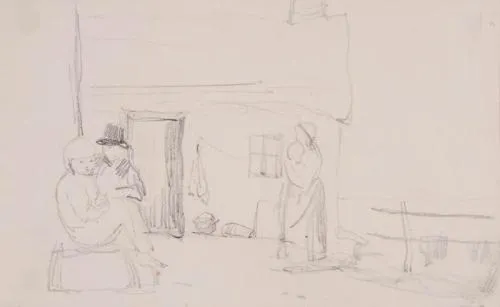
Photo: John Phillip, Public domain, via Wikimedia Commons
There is a particular kind of hush in a country house corridor. Oak floors, rope barriers, a volunteer in a lanyard, and somewhere ahead of you a painted ancestor staring down from the wall. Add a baby who has just fallen asleep against your chest and a toddler asking very loudly whether the suit of armour is real, and the hush becomes something else entirely: a small, movable domestic scene inside a very grand building.
That is the joy of carrying through museums, galleries and heritage sites. You are not trying to smuggle a pram through a Tudor doorway or park it beside a fragile console table. You are simply bringing your child along at their own height — close enough to whisper, high enough to see, and easy to scoop up when the stairs get narrow.
Start with the venue, not the carrier
A little homework goes a long way. Before you leave, check the venue’s website for cloakroom details, lift access, buggy parking and whether there are timed entry slots. National Trust and English Heritage properties often publish access information that includes uneven paths, gravel courtyards and steep staircases. Larger museums usually have a cloakroom or locker system, but not all will take a bulky changing bag, and some ask you to leave large backpacks behind.
If you plan to use a back carry for a toddler, it is worth ringing ahead or asking at the welcome desk. Most staff are perfectly happy to help, but a handful of historic buildings have tight spiral stairs or low beams where a back carry needs extra care. Knowing this in advance turns a potential awkward moment into a simple change of plan.
The cloakroom is your friend, not a hurdle
Many parents treat the cloakroom as a place where the day gets complicated. In reality, it can be the most useful room in the building. Use it to shed coats, stash the changing bag and fill water bottles before you head into the galleries. If your baby is in a buckle carrier, you can often loosen the shoulder straps, take off your coat, and re-tighten without fully removing the carrier — a small skill that saves a lot of faffing beside a display case.
If you are using a stretchy wrap or woven wrap, ask whether there is a quieter corner or a bench where you can re-tie. Many venues have family rooms, and some galleries have seats in unexpected places. A folded muslin in your pocket is useful for a quick feed stop, a makeshift sunshade or a emergency clean-up.
Stairs, stones and low doorways
Stately homes are not known for their accessible floor plans. Narrow staircases, uneven flagstones and low doorways are part of the charm — and part of the challenge. Keep one hand free where you can, and use the handrail rather than the carrier as your balance point. If you are carrying a baby on your front, your view of your feet is limited, so take stairs slowly and choose the wider staircase when there is a choice.
For back carries, check that your child cannot reach out and grab a rope barrier or a delicate textile. A light hood or a tucked-in layer can help. In crowded exhibitions, keep to the edges of the room and avoid the middle of a guided group. People are usually kind, but they also don’t always look down. A quiet “excuse me” and a smile works better than trying to weave through a knot of visitors.
Feeding, changing and the polite pause
Heritage sites are increasingly family-friendly, but not every tea room has a spacious baby change. Ask staff where the nearest facility is, and don’t be shy about using a family room or a quiet bench for a feed. If you are carrying, a front carry can make feeding stops easier, especially if you can loosen the carrier and sit comfortably. Safety comes first: if you need to feed, take your baby out of the carrier and settle somewhere calm rather than trying to feed mid-carry.
For nappy changes, a portable mat and a small wet bag are worth their weight in gold. Some venues have lovely changing rooms; others have a folding table in a loo. Either way, a quick check before you go in saves the whole party from a surprise.
Talking to staff about your sling
Most museum and heritage staff have seen every kind of carrier going. If someone asks you to remove a backpack or to leave a bag at the desk, explain that your baby is in the carrier and that you are happy to follow their safety instructions. If a room has a “no large bags” rule, ask whether a front carry is acceptable. A calm, friendly question usually gets a calm, friendly answer.
If you are ever asked to take your baby out for a security check or a cloakroom rule, do it without apology. It is not a judgement on your parenting; it is simply a building with its own quirks. The same goes for lifts. Some historic houses have very small lifts, and a carrier can make the difference between fitting in and waiting for the next one. Take the stairs if you are comfortable, but never feel you have to prove anything.
Build in the boring bits
A culture-filled day out is not just about the paintings. It is also about the bench outside the tea room, the gravel path that wakes a sleeping baby, and the five minutes spent watching ducks on a formal pond. Plan for those pauses. They are often the moments your child remembers — or, if they are very small, the moments that keep everyone regulated until home time.
The quiet confidence of carrying
You do not need a special timetable or a perfect carrier to enjoy a museum with a baby. You need a comfortable fit, a realistic plan and a willingness to ask for help. Check your sling before you go: tight enough to feel secure, high enough to kiss your baby’s head, with their face visible and their chin off their chest. Then let the day unfold at its own pace.
A sleeping passenger in the portrait gallery is not a problem to be solved. They are part of the visit — a small, warm reminder that culture is not just for the people who can walk. With a little preparation, your sling becomes the quietest, most useful ticket in the building.