Please Mind the Baby: Carrying Calmly on Buses, Trains and Tubes

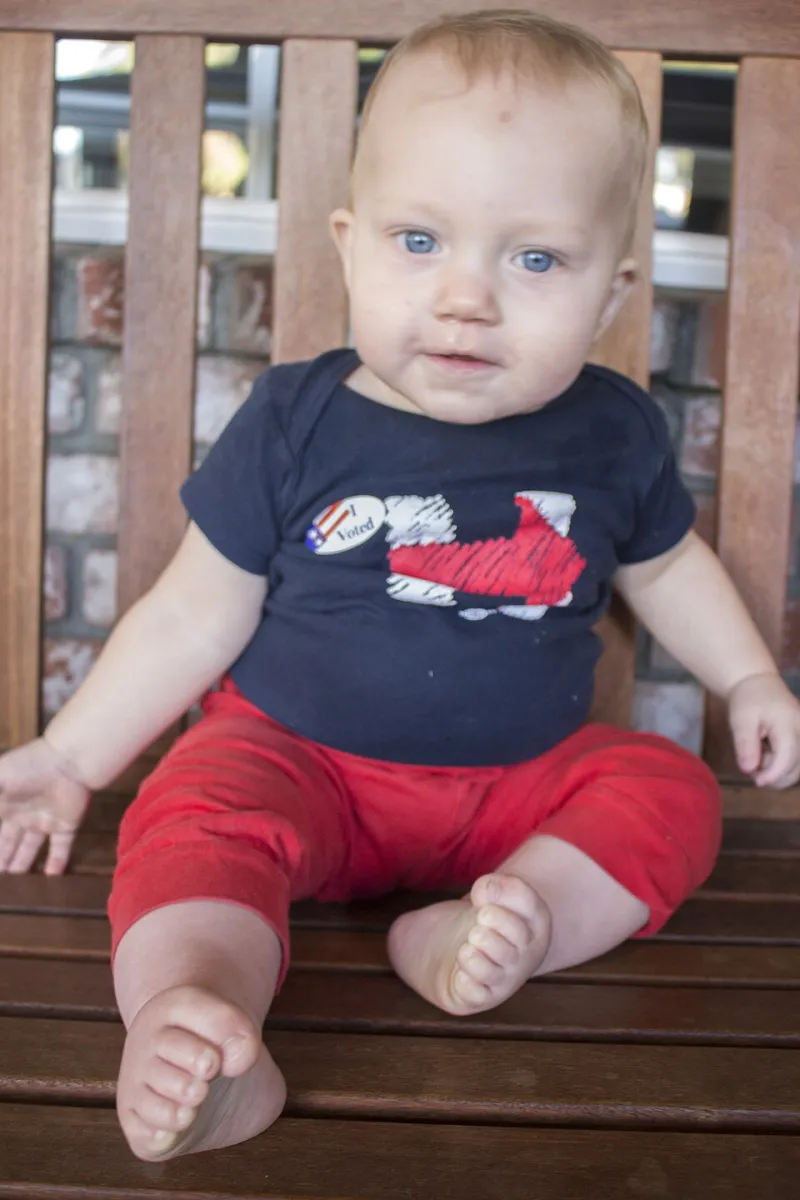
Photo: Mike's Birds from Riverside, CA, US, CC BY-SA 2.0, via Wikimedia Commons
There's a moment, somewhere around the second month, when you realise the pram is brilliant but the carrier is the thing that actually gets you out the door. Onto a bus, up the steps of a train, through the sandwich-shop gauntlet of a high street at lunchtime, and home again before the next feed. It's freeing. It is also, occasionally, a masterclass in British restraint.
Because carrying a baby on public transport asks you to do something we're culturally quite bad at: take up space, and ask other people to accommodate it. Here's how to do both without apologising for existing.
The thirty-second check before you board
Do this on the platform or at the bus stop, not on the stairs.
- Make sure the carrier is still snug and the straps haven't loosened while you were walking.
- Check that your baby's face is visible and clear, tucked in your coat if it's cold but never buried under fabric.
- Tuck any dangling straps or long scarf ends away. Loose fabric plus closing train doors is not a good pairing.
- If you're wearing a winter coat over both of you, mind that your baby isn't overheating. A smaller layer between you and a coat over the carrier straps usually works better than something bulky underneath.
- Have your ticket or phone actually in your hand. Fumbling at a barrier with a sleeping baby on your chest is its own small comedy.
The polite ask (and the polite no)
Asking someone to shift their bag takes roughly three words and about a year of social conditioning to feel comfortable with. It gets easier. A few that work:
"Sorry, could I squeeze in there?"
"Would you mind moving your bag a sec? I've got a little one on board."
"Is anyone sitting here?" — a classic for a reason.
And when someone asks you to move, or a seat offer comes your way, you're allowed to simply say "thanks, that's kind" and take it. You don't have to explain why you need it. You don't have to offer it back to someone who looks more tired than you, because that's a game nobody wins.
Equally, nobody is obliged to hand over a priority seat after a twelve-hour shift, and a polite "sorry, I'm getting off in two stops" is a complete sentence.
On the train: pick your spot before you sit
If you're standing, the corner by the doors or the space at the end of a carriage is your friend. Somewhere you can put your back to something solid, hold a rail and not have a rucksack in your ribs every time the train lurches.
A few things worth knowing:
- Sit facing the direction of travel if you can. It's gentler on a queasy stomach.
- Keep one hand near your baby when the carriage is packed. Not gripping, just present.
- On older trains with slam doors, give yourself room and take your time. The guard will wait; they'd rather wait than have you hurry.
- If the train is genuinely wedged and you're going several stops, it's completely acceptable to step off and get the next one. Or to stand in the vestibule and enjoy the quiet.
On the Tube, the same logic applies but faster. Avoid the central stretch of the platform where the crowds funnel in, walk down towards the front or back of the train, and remember that the very first carriage is often emptier because people can't be bothered to walk.
When should the carrier come off?
Short answer: when it needs to. Longer answer: on a forty-minute train journey, if your baby is getting restless or hungry, it's much easier to take the carrier off and feed in a seat than to wrestle with straps while standing.
It's also fine to keep your baby in the sling for a nap, provided their face stays visible and their chin isn't slumped onto their chest. Give them a gentle check now and then, particularly if they've been still for a while.
If it's hot — and a crowded Northern Line carriage in July is its own microclimate — loosen things where you safely can, take off your own outer layer, and offer a feed if you're breastfeeding. A fractious baby is usually either hungry, too warm or bored, and two of those three are fixable on the spot.
The buggy-and-sling dilemma
Here's the situation: you've brought the pram because you need the basket, but the bus has one buggy space and it's already taken.
Practical answers, in rough order of usefulness:
- Take the carrier as backup. Wear it in, fold the pram if it folds small, and use whichever makes sense on the day. A sling stuffed in the changing bag weighs almost nothing.
- Ask the driver before you board. Most are genuinely helpful and will tell you if there's room. It's a much better conversation at the door than halfway down the aisle.
- Know your route. Some bus operators publish which services are usually busiest; some stations have step-free access maps online. TfL's accessibility pages, National Rail's station information and most local bus operators all have this, and it's worth a look before a first solo trip.
- Accept the swap. Fold the pram, carry the baby, and pop the shopping in the basket of a friend's pram later. It happens to everyone.
The small kindnesses that make it work
Public transport with a baby runs on tiny transactions of goodwill. Someone holds a door. Someone shifts a suitcase. Someone spots you at the top of the stairs and waits.
You can be that person too, and it costs nothing. Offer a seat to anyone carrying a child, obviously, but also to anyone who looks like they need it more than you do. Say thanks to the person who moves their bag. Don't tut at the pram brigade blocking the aisle; you've been there, and you'll be there again.
And on the pavements — those gloriously narrow, wheelie-bin-obstructed British pavements — a smile and a "sorry, mind your arm" goes a long way further than a silent squeeze past. If the pavement is truly impassable, step into the road carefully, or just wait. Nobody is timing you. Not even the baby.