One Free Hand, One Calm Exit: Babywearing on the Nursery and School Run
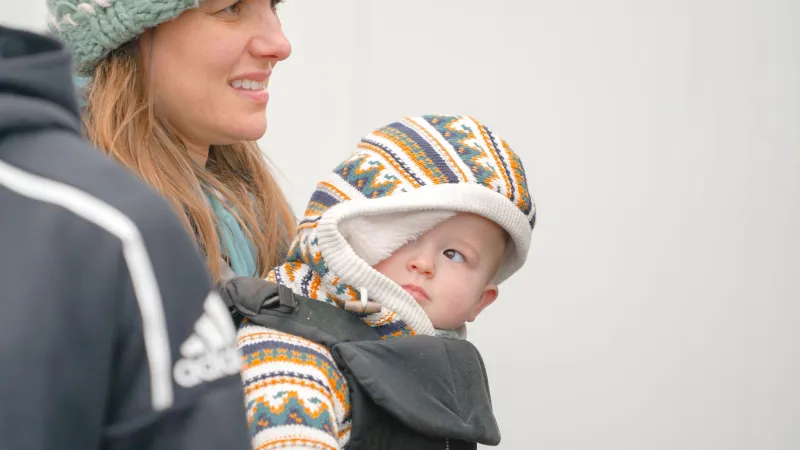
There is a particular kind of British morning chaos that happens at 8:12 on a damp Tuesday in November. One child needs a book bag, another has lost a welly, and the baby has chosen this exact moment to fall deeply asleep on your shoulder. The nursery run is not a military operation, even if it sometimes looks like one from the outside. A sling or carrier can turn it into something calmer — not perfect, just calmer.
Start with the carrier, not the coat
The order you do things in matters more than you might think. Before you start wrestling a toddler into a waterproof, get your carrier on and adjusted. Put it on over your normal clothes, then add your coat over both of you if it fits comfortably, or use a carrier cover made for cold and wet weather. Avoid bulky baby snowsuits inside the carrier; they can interfere with a safe, snug fit and make it harder to check your baby’s airway and position.
If you are driving to nursery, the baby goes in the car seat, not the sling. Never wear a carrier while driving, and never use a sling in place of a car seat. At the other end, put the carrier on first, then lift your baby out of the car seat and settle them in. It sounds small, but doing it in that order means you are not trying to buckle a carrier one-handed while a four-year-old shouts about a lost glove.
Do the basic safety checks every time: close enough to kiss, clear airway, supported back, and knees higher than bottom for a little one in a soft carrier. If you are new to carrying, a local sling library or a fit check with an experienced peer supporter is worth the trip.
The gate-side handover without the scramble
The school gate is a social space, a traffic jam and a goodbye all at once. The trick is to find a spot slightly out of the flow before you start unbuckling, unzipping or handing over. If you are dropping an older child, keep the baby in the carrier and use your free hands for the book bag, the water bottle and the last-minute permission slip.
If you are dropping the baby at nursery, take them out of the carrier inside the building rather than at the gate. Staff are usually used to parents needing a moment, and many nurseries have a safe spot for a car seat or a changing bag. Ask your key person where they would like the carrier to go, and keep the bag light enough to hang on your shoulder without pulling you off balance.
A small handover routine helps everyone. Pause. Say the same few words each time — “Right, let’s find your hook” — and give your older child a job, such as holding the snack bag or pressing the buzzer. It gives the morning a shape without turning it into a drill.
Timing, layers and the British weather
Leaving five minutes earlier is the most effective babywearing accessory nobody sells. Those five minutes give you room to adjust a strap, zip a cover and walk at a pace that does not involve dragging a reluctant reception child by the sleeve.
In rain, use a carrier cover or a well-fitted babywearing coat rather than draping a loose blanket over the baby’s face. Check that no fabric is covering their nose or mouth, and keep an eye on how warm they feel at the back of the neck. In cold wind, a hat and mittens for your baby and a hood for you are usually more useful than extra padding. In milder weather, dress both of you as you would for a normal walk, then add only what the carrier needs.
Waiting at the gate is its own small challenge. If the queue is long, stand under a shelter, keep gently moving, or chat to another parent. Avoid loosening the carrier to bounce your baby; if they need a change of position, take the time to adjust it properly rather than letting it hang low.
When there is an older sibling in the mix
Some families find a back carry for the older toddler and a front carry for the baby works well, but only once both children are comfortable and you have practised at home. For many parents, the simpler set-up is baby in the carrier and the older child walking, holding a hand or using a buggy board. Reins can help if your child is going through a darting phase.
Practise the nursery run at a quiet time before you need it to work. Put the carrier on, pop the baby in, and walk to the front door and back. Let your older child practise holding the side of the carrier or the pushchair handle. The aim is not a flawless system; it is a familiar one.
The bit where it all goes wrong
It will go wrong sometimes. The baby will need a nappy change just as the gate opens. The older child will announce that today is non-uniform day and you have missed the memo. The rain will come sideways. A carrier does not remove those moments, but it does give you two free hands and a settled baby, which is often enough to stop a small wobble becoming a full morning meltdown.
Keep the carrier by the door, keep the bag packed the night before, and keep your expectations kind. The nursery run is not a test of your organisational skills. It is just a walk, a handover, and a way of getting everyone where they need to be with a bit of closeness along the way.